Monday, January 15, 2007
Cast of 24 of Larry King
Here's the transcript of January 9th's Larry King Live, featuring the cast of 24.


Thursday, January 11, 2007
Retreat this weekend
Tomorrow Jason, Barb, Mandy and I are heading to the Tennessee River for our first of hopefully many annual retreats. First of all, thanks to Charles and Pat Ennis for the use of their new "river" house. Our first of five interest meetings starts January 21, so this will be a great time for us to get ready for that. It's also going to give us an opportunity to reflect on this year, and to give thanks to God for all He's done.
John Piper at Passion
Here's the transcript from one of John Piper's talks at Passion last week. The message was titled "How to Deal with the Guilt of Sexual Failure for the Glory of Christ and His Global Cause."
Monday, January 01, 2007
The Art of Haggling
I went to India a few years ago, and one of the many highlights of the trip was learning the art of haggling. We haggled for rickshaws mostly, knowing up front that the price quoted was going to be much higher than normal. One day we went to an outdoor market. While we were walking around, and man asked us if we would like to buy a small toy flute. I really didn't have need for a small toy flute, and on top of that, it was expensive. I believe he wanted 300 rupees for it, which is the equivalent of around $6 or $7. I politely told him that I wasn't in the market for a small toy flute at the time, but I would keep him in mind if anything changed. For the next hour, when we would come out of a shop he would be there, offering us a sweeter deal. By the end of that hour, I had come to understand two things: First, I needed a small toy flute, and second, I was learning the art of haggling. By the time it was over, he had sold it to me for 30 rupees, and 90% discount from the original price. I of course was feeling very proud of myself. (Of course, I also realize that the small toy flute was probably worth 10 rupees, but that's another story).
So...why in the world am I bringing up this story? It's because I just read this article. Now you too can learn the art of haggling. It works here in the U.S. as well.
So...why in the world am I bringing up this story? It's because I just read this article. Now you too can learn the art of haggling. It works here in the U.S. as well.
Thursday, December 14, 2006
Church & Culture Pt. 3
Catalyst just posted a link to the article I blogged on last week. There are some other pretty good articles as well. Here's the link.
Friday, December 08, 2006
Teen suicide
Occasionally I hear a statistic that blows me away. Last Monday's Commercial Appeal contained an article titled "Schools get serious about suicide." Here are the first two lines of the article:
Suicide is the second-leading cause of death from age 15 to 19.
Suicide is the second-leading cause of death from age 15 to 19.
Nearly 14 teens kill themselves every day in the United States.
Larry Legend turns 50
I grew up loving Larry Bird. The great Celtic turned 50 yesterday. The following is a retelling by coach KC Jones of a timeout before the closing seconds of a game. This was Larry at his finest!
We'll let K.C. Jones tell what it was like:
We'll let K.C. Jones tell what it was like:
"We are playing in Seattle. Five seconds left on the clock and the score is tied and it is our timeout. In the huddle, I am thinking Xavier McDaniel is guarding Larry.
"So I said, 'Now Kevin, you take the ball out and get it to Dennis and Dennis you can finish that.'
"Larry said, 'Why don’t you just give me the ball and tell everybody else to get the hell out of the way?'
"So I said, 'Larry you play, and I’ll coach.'
"And he said, 'All right.'
"So I said, 'Dennis, you take it out and you get it to Kevin. Kevin you get it to Larry and everybody else get the hell out of the way.'
"That is communication. Before the timeout was over, he leaves the huddle, and I said to myself, where is he going.
"And Xavier was right there and Bird said, 'Xavier, I’m getting the ball. I’m going to take two dribbles to the left. I’m going to step back behind the three point line and stick it.'
"And that is what he did. So when he stepped back behind the line and released the ball, as soon as he released it, his arm was still in the air going to the dressing room. Game over."
Thursday, December 07, 2006
Fast Company's 2007 Social Capitalist Awards
Fast Company recognizes entrepreneurs who are changing the world. They make their decisions based on the following criteria:
Social Impact, Aspiration & Growth, Entrepreneurship (the ability to do a lot with a little), Innovation, Sustainability, and a Customized Approach.
Link
Social Impact, Aspiration & Growth, Entrepreneurship (the ability to do a lot with a little), Innovation, Sustainability, and a Customized Approach.
Link
Church & Culture Pt. 2
"...over the next decade, the two most effective expressions of the Gospel will be through social justice and environmental justice."
This statement was made by Clint Kemp, the pastor of New Providence Community Church. Yesterday Jason and I were talking about both of these issues. As I've said before, there was a time when neither of these issues were even on my radar. I'm thankful to God for changing that.
In today's paper, there was an article in the Life Magazine pullout section called "What I Prayed For." A fourth grader wrote this: "I'm praying for Darfur. For the people there to get clothes and food and beds. I learned about Darfur on Oprah, and I read books about Africa." Yeah Oprah, and yeah fourth grader. As a side note, I don't remember what kinds of things I prayed for when I was in fourth grade, but I'm pretty sure it wasn't for anything like this.
Church & Culture Pt. 1
I recently read an article about a church in the Bahamas (the island of New Providence) . A few years ago this church, New Providence Community Church, decided to get involved in their community. Before this time they had spent most of their time, energy and money on designing an excellent Sunday morning service that people could bring their friends to. After a few years of doing this, though, they realized that it "was not creating the kind of Christ-followers that could revolutionize the island." They first opened their building up to the community, and began offering Taekwando classes, gymnastics, art lessons, etc. They then decided that they needed to begin doing something about the AIDS crisis on the island. (Nassau has one of the highest concentrated areas of AIDS cases in the first world).
Next, they adopted a section of beach that had been turned into the island's dump. "They believed that as followers of Christ, they had a responsibility to redeem this hideous, corrupted area of the island." They spent two years cleaning it up, then invited local artists from the island to come and help transform this space into something beautiful. They call it Sacred Space. (You can see pictures, along with a five minute video, here). "The breathtaking sunset views create an amazing spiritual experience - but more than that, it's a testimony to the leaders of the Island of how a community can be a significant part of th restoration of all things within their society."
This article was written by Gabe Lyons. It's not currently online, but hopefully will be soon.
Here's one final quote from the article:
"New Providence Community Church is shaping the culture of the Bahamas because they have approached their mission with the belief that they are called to be the Gospel in the context of their community. By deciding not to make their church a place for people to come and see, they have pushed their people to go and do. And they clearly illustrate the influence one church can have when it takes this mission seriously."
Next, they adopted a section of beach that had been turned into the island's dump. "They believed that as followers of Christ, they had a responsibility to redeem this hideous, corrupted area of the island." They spent two years cleaning it up, then invited local artists from the island to come and help transform this space into something beautiful. They call it Sacred Space. (You can see pictures, along with a five minute video, here). "The breathtaking sunset views create an amazing spiritual experience - but more than that, it's a testimony to the leaders of the Island of how a community can be a significant part of th restoration of all things within their society."
This article was written by Gabe Lyons. It's not currently online, but hopefully will be soon.
Here's one final quote from the article:
"New Providence Community Church is shaping the culture of the Bahamas because they have approached their mission with the belief that they are called to be the Gospel in the context of their community. By deciding not to make their church a place for people to come and see, they have pushed their people to go and do. And they clearly illustrate the influence one church can have when it takes this mission seriously."
Thursday, November 30, 2006
Sunday, November 26, 2006
IVP New Testament Commentary
The IVP New Testament Commentary is online. I've always liked this commentary set.
Monday, November 13, 2006
Persecution
Yesterday was the International Day of Prayer for the Persecuted Church. Last night our church met and spent some time praying for our brothers and sisters throughout the world who are suffering for their faith in Jesus. I did a little reading on Saturday and discovered that over 200 million Christians are suffering from persecution. They define this persecution as being interrogated, arrested, tortured, or killed. I also read a story of a man who has faced persecution every day since he became a Christian. I realize that I'm in the exact opposite place. In all of my years of being a Christian, I've never truly experienced persecution. This obviously makes me question "Why?" The second question I have to ask myself is, "What am I now going to do with this knowledge?"
During our prayer time, Adam was becoming a bit of a distraction, so I took him to the back room. I asked him if he would like to pray with me. He said yes, and so we sat in the floor, held hands, bowed our heads, and I said a thirty second prayer. When I said Amen, he looked up and smiled at me. It was one of those truly great moments for a dad.
During our prayer time, Adam was becoming a bit of a distraction, so I took him to the back room. I asked him if he would like to pray with me. He said yes, and so we sat in the floor, held hands, bowed our heads, and I said a thirty second prayer. When I said Amen, he looked up and smiled at me. It was one of those truly great moments for a dad.
Psalm 126
The reading from this morning's Celtic Daily Prayer was from Psalm 126. This psalm was most likely written sometime after King Cyrus of Persia allowed the Jewish people to return to their homes after being in exile for seventy years (see Ezra 1)
When the Lord brought back the captives to Zion,
we were like men who dreamed.
Our mouths were filled with laughter,
our tongues with songs of joy.
Then it was said among the nations,
"The Lord has done great things for them."
The Lord has done great things for us,
and we are filled with joy.
Psalm 126:1-3
When the Lord brought back the captives to Zion,
we were like men who dreamed.
Our mouths were filled with laughter,
our tongues with songs of joy.
Then it was said among the nations,
"The Lord has done great things for them."
The Lord has done great things for us,
and we are filled with joy.
Psalm 126:1-3
Sunday, November 12, 2006
The Art of Evangelism
Some will read the title of this post and be immediately turned away. However, I think you'll be surprised at the author, as well as the content. It's the title of a post by Guy Kawasaki, author of The Art of the Start. He was an "evangelist" for Apple computers back in the 80's and 90's.
Out of curiosity, I went to SimplyHired, a vertical search engine for jobs, and looked for openings containing the keyword “evangelist.” Amazingly, there were 611 matches--and none were for churches. It seems that “evangelist” is now a secular, mainstream job title. Indeed, the first eight matches were for evangelist jobs at Microsoft--go figure.
Out of curiosity, I went to SimplyHired, a vertical search engine for jobs, and looked for openings containing the keyword “evangelist.” Amazingly, there were 611 matches--and none were for churches. It seems that “evangelist” is now a secular, mainstream job title. Indeed, the first eight matches were for evangelist jobs at Microsoft--go figure.
As people hit the streets with this title, they need a foundation of the fundamental principles of evangelism. Fulfilling this need is the purpose of today's blog.
- Create a cause. As the previous blog called “Guy's Golden Touch” explained, the starting point of evangelism is having a great thing to evangelize. A cause seizes the moral high ground. It is a product or service that improves the lives of people, ends bad things, or perpetuates good things. It is not simply an exchange of things/services for money.
- Love the cause. “Evangelist” isn't simply a job title. It's a way of life. It means that the evangelist totally loves the product and sees it as a way to bring the “good news.” A love of the cause is the second most important determinant of the success of an evangelist--second only to the quality of the cause itself. No matter how great the person, if he doesn't love the cause, he cannot be a good evangelist for it.
- Look for agnostics, ignore atheists. A good evangelist can usually tell if people understand and like a product in five minutes. If they don't, cut your losses and avoid them. It is very hard to convert someone to a new religion (ie, product) when he believes in another god (ie, another product). It's much easier to convert a person who has no proof about the goodness or badness of the evangelist's product.
- Localize the pain. No matter how revolutionary your product, don't describe it using lofty, flowery terms like “revolutionary,” “paradigm shifting,” and “curve jumping.” Macintosh wasn't positioned as the third paradigm in personal computing; instead, it increased the productivity and creativity of one person with one computer. People don't buy “revolutions.” They buy “aspirins” to fix the pain or “vitamins” to supplement their lives.
- Let people test drive the cause. Essentially, say to people, “We think you are smart. Therefore, we aren't going to bludgeon you into becoming our customer. Try our product, take it home, download it, and then decide if it's right for you.” A test drive is much more powerful than an ad.
- Learn to give a demo. An “evangelist who cannot give a great demo” is an oxymoron. A person simply cannot be an evangelist if she cannot demo the product. If a person cannot give a demo that quickens the pulse of everyone in the audience, he should stay in sales or in marketing.
- Provide a safe first step. The path to adopting a cause should have a slippery slope. There shouldn't be large barriers like revamping the entire IT infrastructure. For example, the safe first step to recruit an evangelist for the environment is not requiring that she chain herself to a tree; it's to ask her to start recycling and taking shorter showers.
- Ignore pedigrees. Good evangelists aren't proud. They don't focus on the people with big titles and big reputations. Frankly, they'll meet with, and help, anyone who “gets it” and is willing to help them. This is much more likely to be the database administrator or secretary than the CIO.
- Never tell a lie. Very simply, lying is morally and ethically wrong. It also takes more energy because if one lies, then it is necessary to keep track of the lies. If one always tells the truth, then there's nothing to keep track of. Evangelists know their stuff, so they never have to tell a lie to cover their ignorance.
- Remember your friends. Be nice to the people on the way up because one is likely to see them again on the way down. Once an evangelist has achieved success, he shouldn't think that he'll never need those folks again. One of the most likely people to buy a Macintosh was an Apple II owner. One of the most likely people to buy an iPod was a Macintosh owner. One of the most likely people to buy whatever Apple puts out next is an iPod owner. And so it goes.
Wednesday, November 08, 2006
Our trip to New England


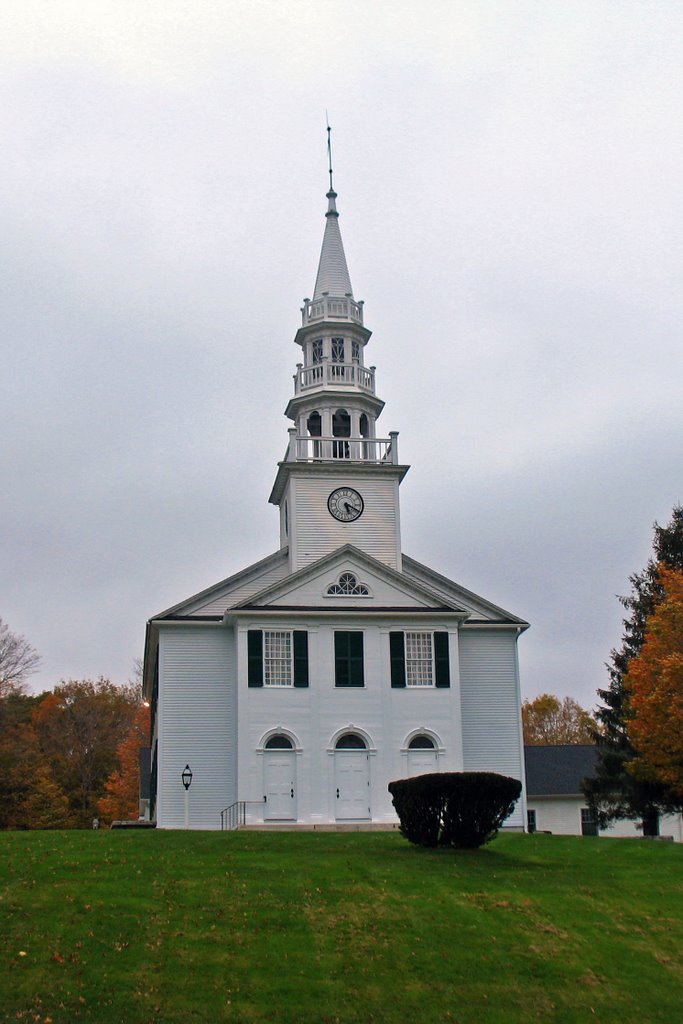



I'm finally getting around to posting some pictures that Mandy took during our trip to New England. She's getting to be a really great photographer, as I'm sure you'll agree!
If you'd like to see more, here's a link to some pictures that Mandy posted to Kodak's site.
New England Holocaust Memorial

One of the things we got to see while we were in Boston was the New England Holocaust Memorial. It features six glass towers, each 54 feet high. Inscribed into the glass are six million numbers. At the end of the walk is a poem written by Martin Niemoller, a Lutheran pastor from Germany. The poem is titled First they came..."
They came first for the Communists,
and I didn't speak up because I wasn't a Communist.
Then they came for the Jews,
and I didn't speak up because I wasn't a Jew
Then they came for the trade unionists,
and I didn't speak up because I wasn't a trade unionist.
Then they came for the Catholics,
and I didn't speak up because I was a Protestant.
Then they came for me,
and by that time no one was left to speak up.

National Community Church
I just heard about these guys. They are a church in Washington D.C., and are one of the most innovative churches I've come across in a long time. They are a multi-site church that meets in movie theaters throughout the city. I heard about them through the most recent Catalyst podcast. (By the way, I have to plug them again. If you haven't subcribed to this podcast you should. Here's the link to their podcast).
Here are a few of their values:
Here's the pastor's (Mark Batterson) blog, and here's a link to their site.
Here are a few of their values:
- Expect the unexpected
- Irrelevance is irreverence
- Love people when they least expect it and least deserve it
- Playing it safe is risky
- Everyone is invaluable and irreplaceable
- Everything is an experiment
- You cannot out give God
- Maturity does not equal conformity
- It's never too late to be who you might have been
Here's the pastor's (Mark Batterson) blog, and here's a link to their site.
Article by Gordon Cosby
Gordon Cosby started The Church of the Saviour in Washington, DC, in 1946. I first heard about this church about three years ago, and it has had a profound influence. Actually, it was through them that I first heard of the Inward and Outward Journeys. I felt that this was such a simple way of explaining the church.
I'm happy that Mr. Cosby is still writing. Below are excerpts from a new article that he's just written. Here's the link for the entire article.
I'm happy that Mr. Cosby is still writing. Below are excerpts from a new article that he's just written. Here's the link for the entire article.
To neglect context is literally fatal to a living faith. For me, in the context of my life and era, I am finding that there are two ‘givens’ - necessary components - for a true embodiment of God’s community.
First, I will be part of a small family group of extreme ‘opposites’ - people who represent diversity in terms of race and ethnicity, economics, education, personality and temperament, in all ways - for the express purpose of letting our inner lives be known by one another. This means I will listen to the pain of unhealed wounds, really taking it in to my own inner being and bearing it with others, not shaking it off as soon as I’m able to forget it. This small group becomes for me my primary family. We represent all whom Jesus loves and is seeking to reconcile, bringing us together in deep intimacy.
In this small family, we not only hear each other’s pain and hurt but we also seek to lessen that pain in concrete ways. Together we lift the extreme heaviness of one another’s burdens, and in this way participate in lifting the misery of the ages. We also talk with each other about the pain brought on by the disparity of wealth and privilege and poverty among us, the wounds we’ve experienced through racial hatred and our inability to forgive and ask to be forgiven. We share our resources of money and wisdom and time to ease the pressure of carrying our burdens alone. As we face ourselves and each other in all our rawness and yet don’t run away, we move beyond the ‘principle of reconciliation’ and find a way to be family.
Second, I will be a witness of this good news of reconciliation - telling others of Jesus, who IS the good news. I find that most of us talk more freely of justice, peace, righteousness, being enemies of Empire and lovers of the poor than we do of being lovers and followers of Jesus. We easily ask each other, “How are you doing these days?” but the more important question, “How are you and Jesus doing?” goes unsaid.
Subscribe to:
Posts (Atom)